Independent · not SAM.gov
Competing with no past performance
Updated September 2026
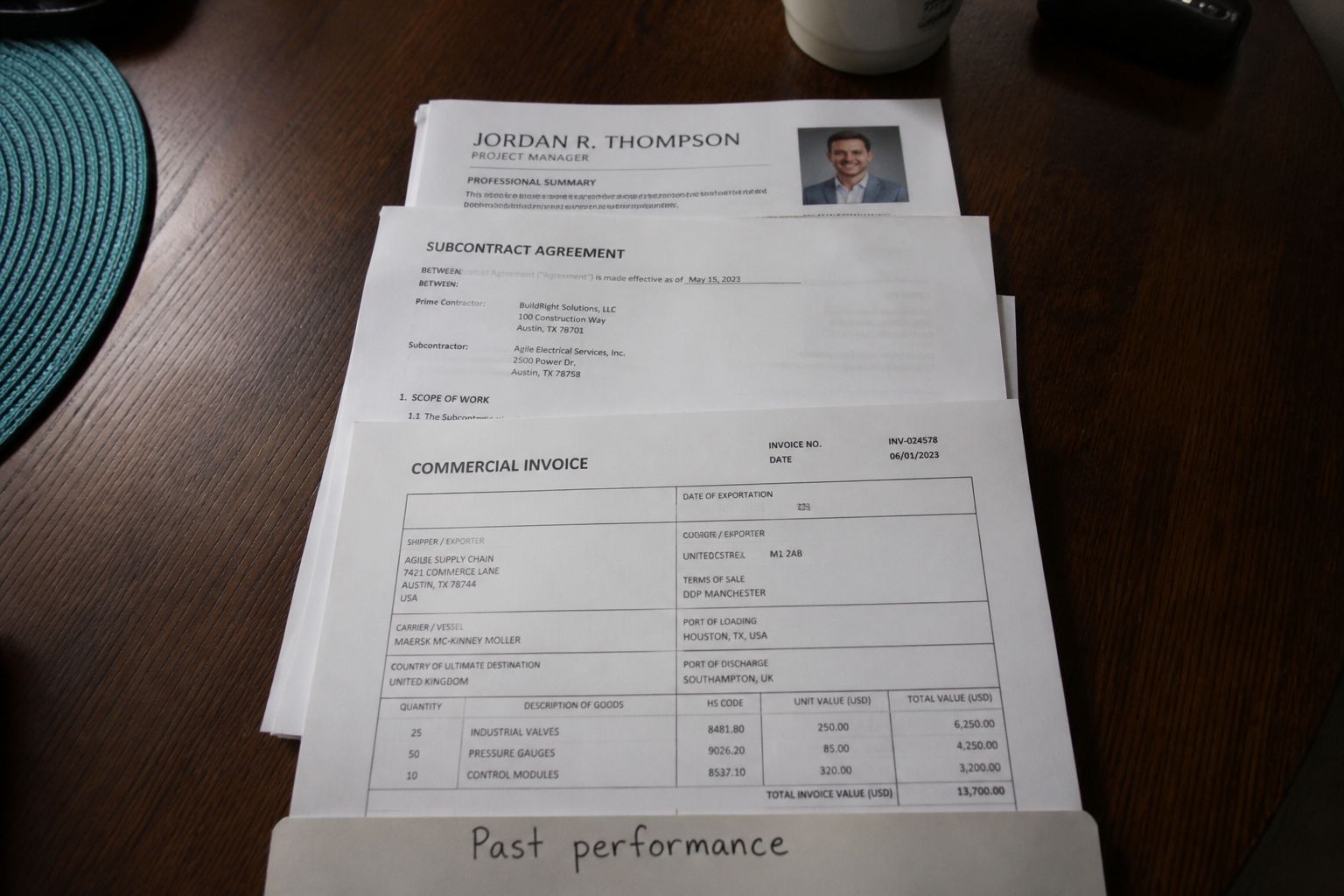
No federal past performance doesn't disqualify you from competing for a federal contract. What actually holds new registrants back is showing up with no evidence of relevant experience at all, so before you bid on anything, pull up the last five years of work you've done, paid or unpaid, government or private, and write down every project where you delivered something similar to what a contract solicitation is asking for. That list is your starting point, and it counts for more than most new registrants assume. One thing worth saying plainly up front: zerogov.net is a privately run guide, not SAM.gov and not any federal agency, so nothing here is an official ruling on your eligibility.
Having zero federal contracts on your resume feels like a locked door. It isn't. Contracting officers are allowed, and in practice expected, to look at experience beyond a list of prior federal awards. If you've never held a prime contract with the government, you are not automatically screened out of competing for one.
You don't need federal experience to bid
A lot of new registrants read "past performance" as a requirement and assume it means federal past performance specifically. It doesn't have to. Contracting officers can and do consider related experience that isn't federal at all: state and local government contracts, private sector work, even work you did as a subcontractor rather than the named contractor on the award. If your company built something comparable for a hospital system or a school district, that's relevant experience a contracting officer can weigh.
What matters is whether the experience is genuinely comparable in scope, complexity, and size to what's being solicited. A solicitation for a $2 million facilities contract isn't going to be won on the strength of a single small maintenance job, but it can still be one data point among several that shows you can execute.
Subcontracting is the fastest way to build a track record
The single most common path new contractors take is subcontracting under an established prime. You do the work, the work gets delivered, and now you have a documented reference a contracting officer can actually call. It doesn't carry the same weight as being the prime on a federal award, but it's real, verifiable experience, and it beats having nothing.
Teaming agreements work the same way for a specific bid: you and another firm combine your qualifications so the proposal shows a fuller history than either company could claim alone. None of this requires anything beyond a standard business agreement between the parties. It doesn't cost anything to set up, and it doesn't require paying a consultant to broker it, though plenty of firms will happily offer to for a fee.
| Path | What it involves | Why it helps |
|---|---|---|
| Subcontracting to a prime | Performing work under an established contractor's existing award | Creates a documented, checkable reference even though you weren't the prime |
| Teaming agreements | A formal agreement to combine two firms' qualifications for one specific bid | Lets a proposal show combined history instead of relying on one company's record |
| SBA mentor protege arrangements | A structured relationship with an established firm, often connected to the 8(a) program | Access to guidance, and sometimes joint venture eligibility on set aside work |
| Non federal or commercial contracts | State, local, tribal, or private sector work similar in scope | Contracting officers are allowed to weigh relevant experience outside federal contracts |
| Smaller, lower competition contracts | Lower dollar opportunities with fewer bidders | An easier first entry point that produces your first genuine past performance reference |
Set-aside programs built with newer entrants in mind
Several small business certifications exist partly because the government recognizes that requiring years of prior federal work would shut out otherwise capable small firms. The 8(a) Business Development Program runs as a structured nine year program aimed at socially and economically disadvantaged owners. Women-Owned Small Business and Economically Disadvantaged WOSB status, Service-Disabled Veteran-Owned Small Business status, and HUBZone status are separate certifications with their own eligibility rules, each layered on top of your basic SAM.gov registration rather than replacing it.
None of these certifications erase the need for real experience, but they narrow the competition to a smaller pool, which changes your odds. The Rule of Two still governs a lot of this: if a contracting officer reasonably expects at least two qualified small businesses to submit competitive offers, the contract gets set aside for small business competition rather than opened to everyone. That rule survived the 2026 FAR overhaul intact, alongside changes to cost data thresholds and how contracts get bought at smaller dollar amounts. If you haven't registered yet, get that done first and use the SAM.gov registration checklist to catch the entity validation problems that stall new registrations before they start.
Where new contractors are genuinely at a disadvantage
It would be dishonest to pretend this is a level playing field. On larger, more complex procurements, an established firm with a decade of federal delivery history is going to beat a brand new registrant most of the time, and no amount of clever framing in a proposal changes that. Evaluators are also human: a contracting officer weighing two similar proposals will often lean toward the one with lower perceived risk, and a company with no track record reads as higher risk almost by default.
The honest strategy is to start where the competition is thinner. Smaller contracts, subcontracted work, and set aside opportunities under a certification you actually qualify for are where new entrants build the record that eventually lets them compete for bigger work. It's slower than winning a large prime contract out of the gate, but it's a real path, not a workaround. Know too that your record follows your UEI and CAGE code: in a September 2026 decision, GAO upheld a Navy evaluation that pulled CPARS ratings beyond the projects the bidders chose to submit, one of the rulings covered in our guide to GAO bid protests. And once you do land that first award, worth remembering that contractors and employees are treated differently if a funding lapse hits mid contract, which is covered separately on our page on shutdowns and your contract.
This site isn't the government and isn't SAM.gov. It's an independent resource, and none of this is a guarantee of award. What's settled: contracting officers are permitted to consider non-federal and subcontract experience, the Rule of Two still applies, and the small business certification programs exist and remain open to newer firms that meet their criteria. What genuinely varies is how much weight any individual contracting officer gives to non-federal experience on a specific solicitation, how long your registration and any certification will take to clear, and how much competition you'll actually face on a given contract. Read the solicitation's evaluation criteria closely before you assume either way.
Independent information, not legal advice. Confirm status and rules on sam.gov and the current FAR text.
Quick answers
- Can I win with zero federal jobs?
- Yes. Related experience can count. Read the evaluation factors.
- Should I invent a past-performance write-up?
- No. Use real commercial or subcontract work. Lying is a worse problem than a thin folder.
- Where do first awards often sit?
- Under simplified procedures and set-asides, when they exist.