Independent · not SAM.gov
What a shutdown means for your federal contract
Updated September 2026
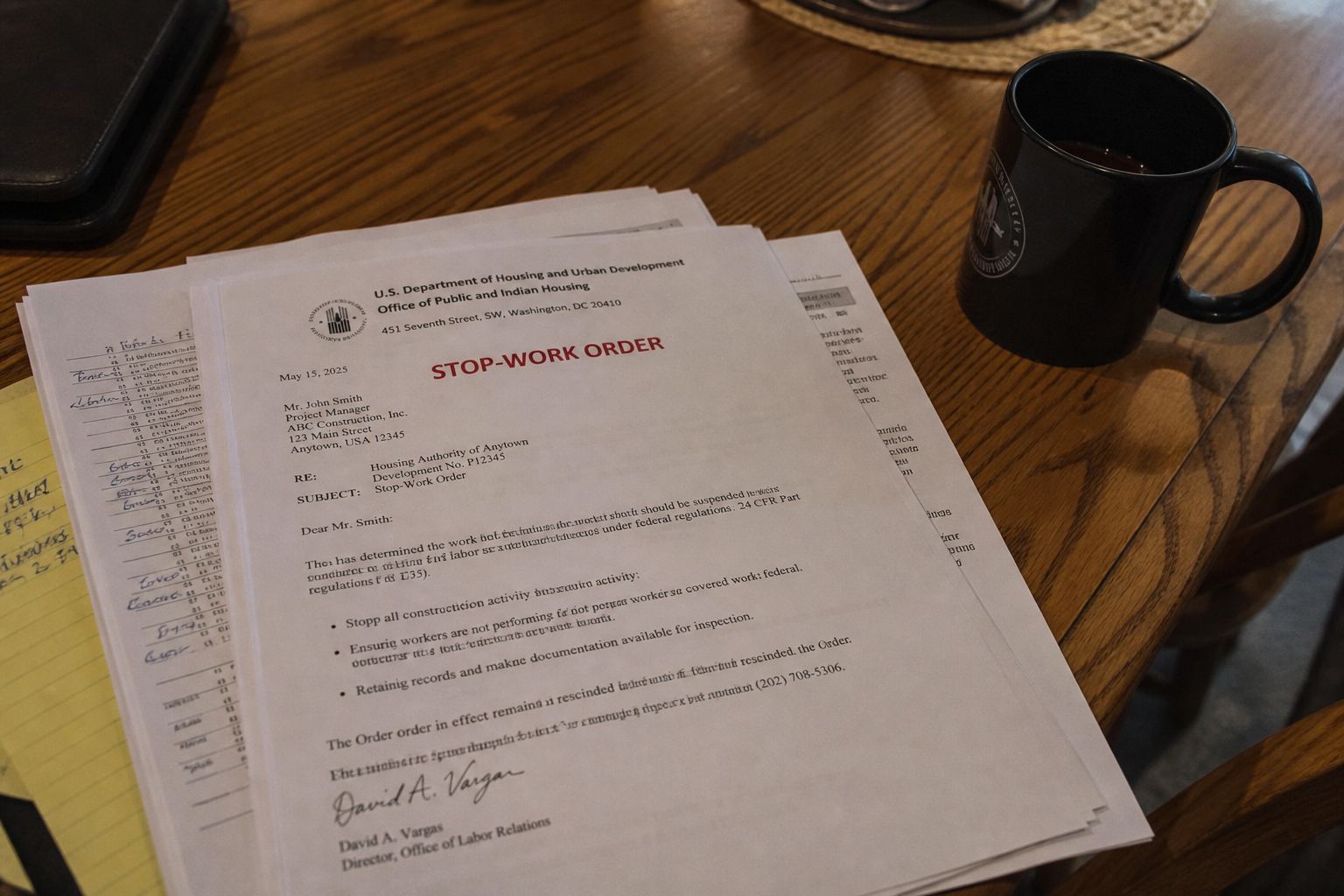
If you're a federal employee, a 2019 law guarantees you back pay once a shutdown ends. If you're a contractor, no equivalent law exists, and that gap is the single most important thing to understand before your next invoice is due.
What's actually happened recently
The past year gives a concrete picture rather than a hypothetical one. There was a 43-day shutdown running from 1 October to 12 November 2025, and a separate partial Department of Homeland Security shutdown from 14 February to 30 April 2026. Congress has struggled to pass appropriations bills on time across this entire period, which is why shutdown risk keeps recurring rather than being a one-off event.
For fiscal year 2027 there was no lapse on 1 October 2026. The President signed H.R. 6500, the Continuing Appropriations and Extensions Act, 2027, on 2 September 2026, and it funds federal agencies through 11 December 2026 at continuing levels. That moves the next funding deadline to 11 December, so the steps below are worth doing before then, not after.
The protection gap that actually matters
The Government Employee Fair Treatment Act (GEFTA), passed in 2019, guarantees retroactive pay for furloughed and excepted federal employees once a shutdown ends. Congress also passed legislation in February 2026 specifically guaranteeing furloughed employees' back pay. Neither of these protections was written for contractors. If your contract's funding lapses during a shutdown and your work stops, there is no automatic guarantee you'll be made whole for that gap the way a federal employee is.
What actually happens to your contract during a shutdown
It depends heavily on how your specific contract is funded and classified, which is exactly why a blanket answer would be misleading. Contracts funded by money already obligated before the shutdown often continue. Contracts dependent on new obligations or annual appropriations can stop cold. Whether your work counts as "excepted" (essential enough to continue) is a determination made by the contracting agency, not something you control.
What to actually do before the next one
- Read your contract's stop-work and termination clauses now, before a shutdown is imminent and you're reading them under pressure.
- Talk to your contracting officer about how your specific contract would be classified if funding lapsed. They deal with this every time appropriations run late, and a direct answer from them beats a general guide.
- Build a cash buffer if a meaningful share of your revenue comes from federal work, since even a contract that eventually pays in full can leave a real gap in the meantime.
- Check current shutdown odds yourself closer to the relevant date rather than relying on any fixed percentage here; prediction markets and congressional schedules move quickly and a number that was accurate in one week is stale within a month.
The honest summary
Shutdowns have become a recurring feature of the current budget environment rather than a rare event, and contractors carry more of the risk than federal employees do when one happens. That's a structural fact about how the law is written, not a prediction about whether the next one occurs. Being registered and ready before a funding gap hits, see our SAM.gov readiness checklist if you're not yet registered, at least means you're not solving two problems at once.
This describes structural facts about contractor versus employee protections and recent shutdown history as of mid-2026. It does not predict whether or when a future shutdown will occur.
Independent information, not legal advice. Confirm status and rules on sam.gov and the current FAR text.
Quick answers
- Do contractors get furlough pay?
- Usually no. Contractor pay follows the contract and invoices, not employee furlough law.
- Does SAM.gov close?
- The website can stay up while awards and reviews stall. Do not let a record expire because the news is loud.
- Who decides if I keep working?
- The contracting officer and the written order. Not a news chyron.